Intelligence= capability.
In pursuit of an abundant future, Durable Intelligence Labs studies AI durability for both productivity and safety.
The intelligence is ready. Durability is the other half.
To achieve abundance, we must build an aligned and durable foundation, so that intelligence creates new productivity which grows in stride with human enlightenment.
Frontier models reason well enough for serious work, but they can’t be trusted in an enterprise setting, in public services, or even in managing your own life. What limits their use is the underdeveloped frontier of durability: the ability of agents to keep their goals, constraints and work valid as a project runs and changes.
We study safety as a precondition for productivity: an agent’s ability to be trusted is a product of it being safe to use, and dependable enough to be given work. We are working towards solving both by developing the model’s external “prefrontal cortex”.
In 1991, Shallice and Burgess studied three patients with injuries to their prefrontal cortex who scored well on intelligence tests. Sent on a simple errands task with its rules written on a card they carried, they regularly broke those rules. Their knowledge was intact. Executive function, the capacity to keep a goal and its constraints active over time, was not.
Long-running agents show the same gap, and we call the missing property durability.
In a 6,000-run comparison on three frontier models in our September 2026 paper, 97.6% of runs with the model’s external “prefrontal cortex” we developed finished with zero hard-constraint violations, against 18.4% for a leading agent framework running with memory and checkpointing.
Science is the most durable system we know, and we are building agents that work the way it does. Researchers leave; their methods, records and review outlast them, so each generation builds on checked work. Agents need the same property across sessions and model generations: capability that compounds, with its constraints and the means to verify it carried forward. Agents built that way could become how science itself gets done.
Read the thesisWhat we mean by durability
Long-horizon reliability
An agent can be trusted to take over projects with multiple stages of sub-tasks, reasoning, and decision making, over weeks and months.
Models as co-workers
An AI colleague learns how the project works, knows why decisions were made and acts when circumstances change.
Safe delegation
Less human intervention and hand-holding, so that human input is leveraged for creative or highly-complex strategic guidance, and standard decisions for project executions can be delegated to responsible models.
Systems of intelligence
We’re testing whether models and agents can work as one organisation, with discoveries that outlast the agents who made them. Similar to human societal learning over generational succession.
Sharp to the last decision
A model reasons as carefully late in the work as it does at the start, with the relevant evidence available for each decision, to ensure consistency of performance.
Knowing what is still true
New evidence changes the decisions that depend on it. The team stops using outdated guidance and acts on what applies now.
Nine papers on durable intelligence
Our papers trace durability from the evidence behind one decision, towards experience which can be passed down between generations of models. The September 2026 paper, Dawn of Durable Intelligence, measures the implications of durability on three frontier models with blind grading. The Valley explores the capability and behaviour of agents, while exploring the nature of synthetic intelligence.
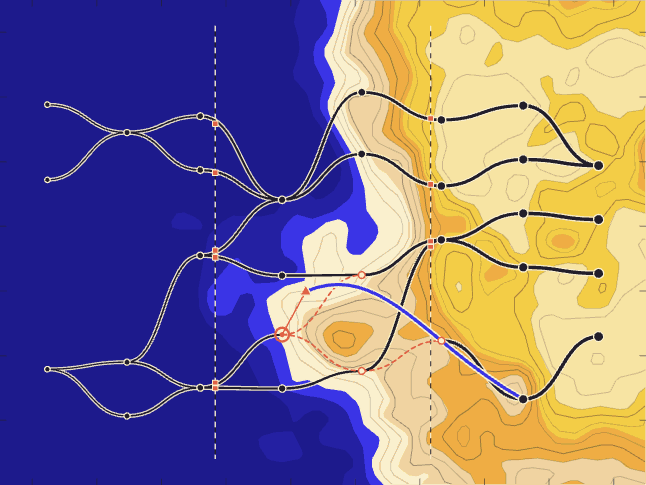
Dawn of Durable Intelligence
Across 6,000 runs on three frontier models, day-30 task fidelity reaches 95.2% against 63.9% for LangGraph Deep Agents. Over 42-day programmes, agents run 14.8 times longer before a person has to step in, with the base model unchanged.

The Valley: Architecture and Observational Protocol
If an agent finds water and then dies, does what it learned die with it? A study of four worlds of a hundred agents, over thirty simulated days, tests whether capability can outlive any one agent.
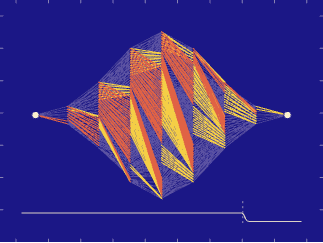
Nenya: Experimental Foundations
Measured on frontier models from Anthropic and Google: a capable model reads a commitment perfectly while it is in context and loses it outright when it leaves. Holding commitments in force took a regulated task from 43% fidelity to 100%.

Modern Type 5 Neurosymbolic Processing
Hard rules can govern a frontier model from outside, with proved guarantees, as long as checking them is compulsory. The starting point of Durable Intelligence’s research into durable AI.
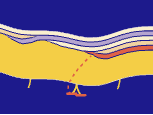
Modern Type 5: The Complete System
A long-running agent piles up obligations. In a thirty-day model of five professional fields, the Complete System keeps 95% of them, against 42% for unaided agents and 48% for restating every rule at every step.

The Durability Frontier
Three in four enterprises that put AI agents in front of customers have pulled them back. The cause is commitments that slip: a capable model forgets a rule once it scrolls out of view.
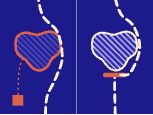
Durability and Fidelity for the Synthetic Workforce
Frontier agents have the skill for grant management, compliance review and underwriting. Rules that scroll out of context and rules nobody wrote down keep them from being trusted with it.

Nenya: The Durability Frontier
A model that is right 97% of the time still fails a weeks-long lab protocol when the other 3% is a contaminated cell line. Capability is oversupplied; fidelity and durability are scarce.

Nenya at a Glance
The July evidence on five pages: 1.000 fidelity on a regulated task, unwritten rules learned after one violation, and 95% of commitments kept across thirty modelled days.
Beyond the Horizon: what durable AI could make possible.



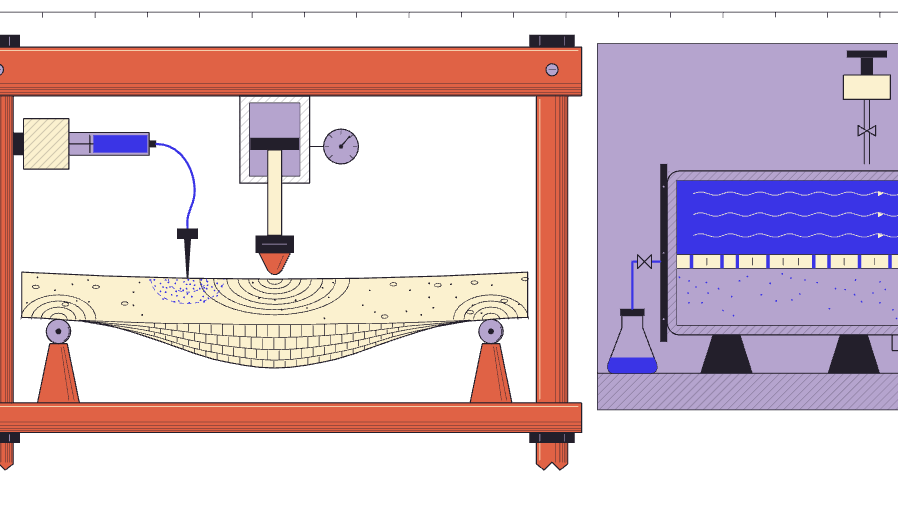
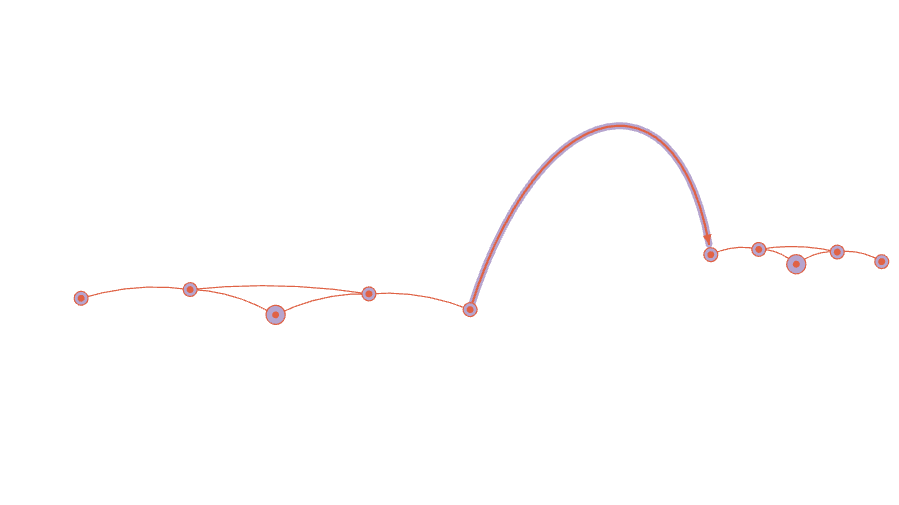
The institution that invents its successors
A stronger successor model inherits decision provenance, including why past experiments were shelved and their identifiability limits, so it avoids rerunning studies that cannot distinguish the hypotheses.

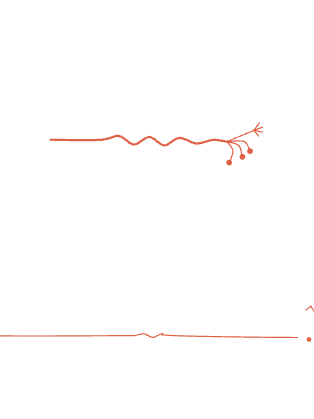
A nervous system, rebuilt for a life
When an over-general learned rule fails on a new case, the system edits that rule locally, without catastrophic forgetting of the knowledge and methods that still hold.
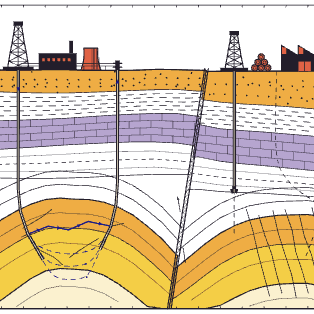
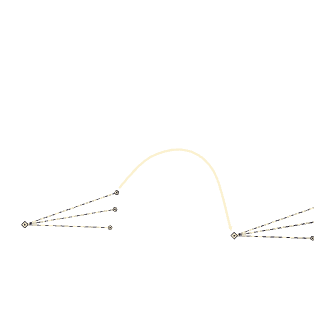
Three founders build an energy industry
Procedures transfer across geothermal sites but site-specific conclusions do not; re-validating them on local evidence prevents negative transfer under distribution shift.
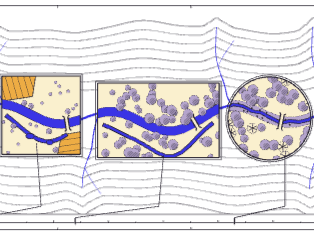
A river, over a century
A belief that held for fifty years fails under concept drift as droughts lengthen; the system revises it while keeping the measurement methods that detected the change.
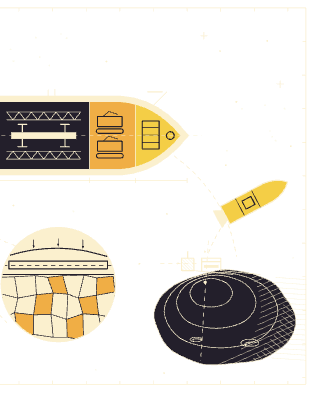
An industry beyond Earth
An improvement found by a successor system is applied back to its predecessor, giving backward transfer across model generations.
1 hour · 1 day · 1 week · 1 quarter · 1 year · 1 decade · 1 century
Durable AI is the next great leap to models that can be trusted to learn, create, discover, and work alongside us.
Dawn of Durable IntelligenceSix problems between frontier models and durable AI
The six questions that decide whether agents can be trusted with long work, and the focus of our research.
See the six research areasAction state
Which evidence should govern the next decision, and what must change when that evidence changes?
Latent control
How can a model keep what it learns on the job through interruptions, restarts and new models?
Model continuity
What does a replacement model need from its predecessor to take over unfinished work?
Collective intelligence
Can a population develop abilities that survive its members and exceed what any member can do?
Self-improvement
Can a system use the methods it has learned to improve the AI that finds its next methods?
Economics
Which system finishes useful work for the least total effort, including the work people must repeat?
100 agents · 4 worlds · 30 simulated days
Capability that belongs to a population.
If an agent discovers a water source and later dies, can the group still use what that agent learned? The Valley is an experiment designed to find out: agents live in mortal bodies, sense only what is near them and leave records in objects. Can artificial intelligence properly form societal evolution under hostile survival conditions?
Read the protocol
We founded Durable Intelligence Labs to build the most critical pillar for a safe and abundant future: scaled productivity in the service of humans.
Learn more about what influenced our dedication to durability and alignment.

Lindell CumesCo-founder and CEO 
Jacob SchoenbergCo-founder and Chief Growth Officer
Help build the key to abundance.
We want to hear from researchers and engineers who have pushed agents past a stable performance, whether that meant a months-long investigation or a team of agents that had to learn from each other. Tell us about the hardest problem you have hit and what you tried.